Why I built it
When I arrived at TH Wildau and joined the Student Parliament, I started seeing the same friction everywhere. Students could not find basic information without clicking through five different systems. Events were announced in places no one checked. The onboarding experience for new students, especially international ones, was overwhelming and cold. The university had the right intentions. The systems just did not talk to each other, and no one had looked at the whole picture from the student's perspective.
So I decided to build what I wanted to exist. Not a concept. Not a mockup. A working application that solved real problems for real students at TH Wildau.
What it does
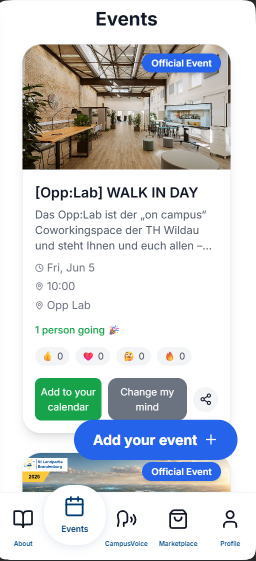
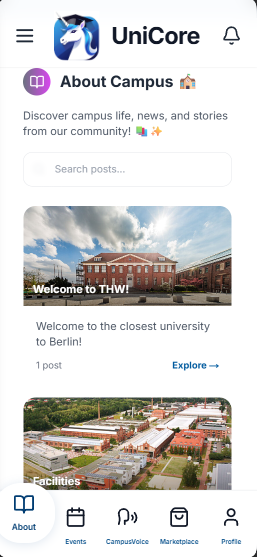
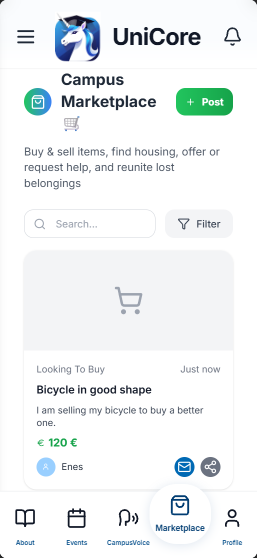
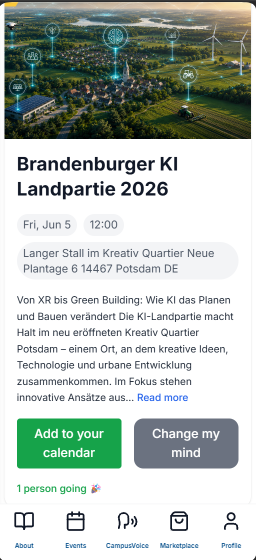
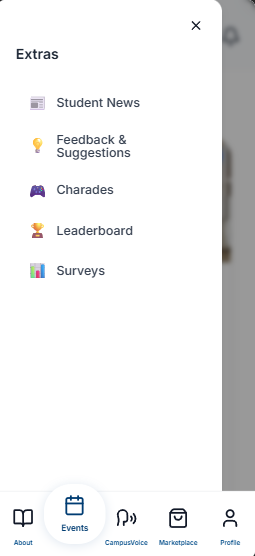
Unicore is a campus companion app designed specifically for TH Wildau students. It brings together the things that were previously scattered across the university's digital landscape into one place that actually makes sense to use.
Screenshots
How it was built
I built Unicore independently, across multiple iterations. The stack is React, Node.js, and TypeScript. I made technical decisions based on what would let me ship fast and iterate quickly.
The design process ran alongside the technical build. I was already embedded in the student community through the Student Parliament, which meant I had direct access to the people I was designing for. Every feature was shaped by conversations with students, not assumptions about what they needed.
The Campus Charades feature deserves a separate mention. Onboarding at a new university is disorienting, especially for international students. Most onboarding interventions are dry and forgettable. A game built around the actual geography and culture of the campus sticks differently. It turns a stressful orientation period into something students actually want to engage with.
What happened next
When I had something working, I started presenting it. First to my faculty, then to the team responsible for the university's existing app. That route did not go anywhere. Emails went unanswered. The established path was not going to open on its own.
So I knocked on other doors. I believe in disruptive technology. Even when the current establishment resists, innovation happens anyway. The question is just whether you are patient enough and persistent enough to find the people inside the institution who think the same way. I found them. The open-minded people with an appetite for change exist in every organisation. You just have to get past the ones who do not answer their emails.
Eventually the right conversations happened. I was offered a position as Student Assistant to help redesign the university as a student-centred service, with Unicore as part of the foundation. The app is now in active development in collaboration with the university's app development team.
Outcomes
What I learned
Building something nobody asked you to build is a different kind of discipline. There is no brief, no deadline, no one checking your progress. The only thing that keeps you going is whether you actually believe the problem is worth solving. I did. That belief is what got it finished.
Navigating institutional resistance was not the hard part for me. I am not primarily a technical person. Talking to people, reading rooms, finding the right angle to make someone see what you see... That comes naturally. The harder lesson was about patience. Real change inside an institution moves slowly, and the people who resist it are not always wrong. Sometimes they are protecting things that matter. Understanding that made me a better advocate for the things I was trying to change.
The gap between a side project and something that matters is almost always just one thing: the willingness to keep going after the first door closes.